Photon Counting Spectral CT
Computed Tomography (CT) is one of the most commonly used medical imaging procedures for imaging cancer, stroke, cardiovascular disease and more. Every year hundreds of millions of CT scans are performed worldwide.
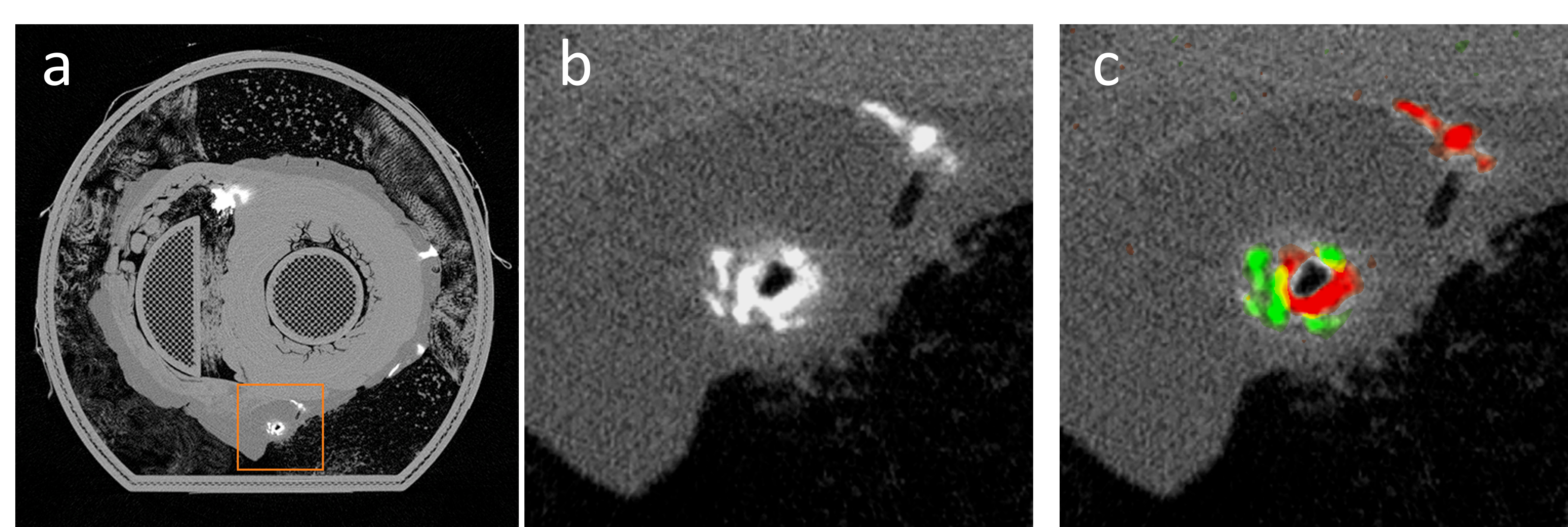
In our research we are developing the next generation of x-ray CT technology, which uses photon-counting silicon detectors to produce unprecedented image quality. To further enhance the image quality we combine this with advanced AI-based data processing.

Spectral photon counting CT makes subtle tissue changes easier to see, and replaces the current gray-scale image values with physical measurement of material concentrations. This technology can also reduce the radiation dose, which is particularly important when imaging children since they are more sensitive for radiation.
This is one of the most important milestones in the development of CT, and our research is at the forefront.