

Inline-adaptive radiotherapy
One of the most common treatments for cancer is megavoltage radiotherapy, where a linear accelerator creates a beam of high-energy x-rays directed onto the tumor. Tomographic imaging before treatment is used to adapt the treatment plan to patient's position and anatomy, but a problem is that the patient can move during the treatment.
In this project, which is a collaboration between KTH and Elekta with funding from the Swedish Foundation for Strategic Research, we will develop an x-ray computed tomography imaging technique able to track organ motion during the treatment.
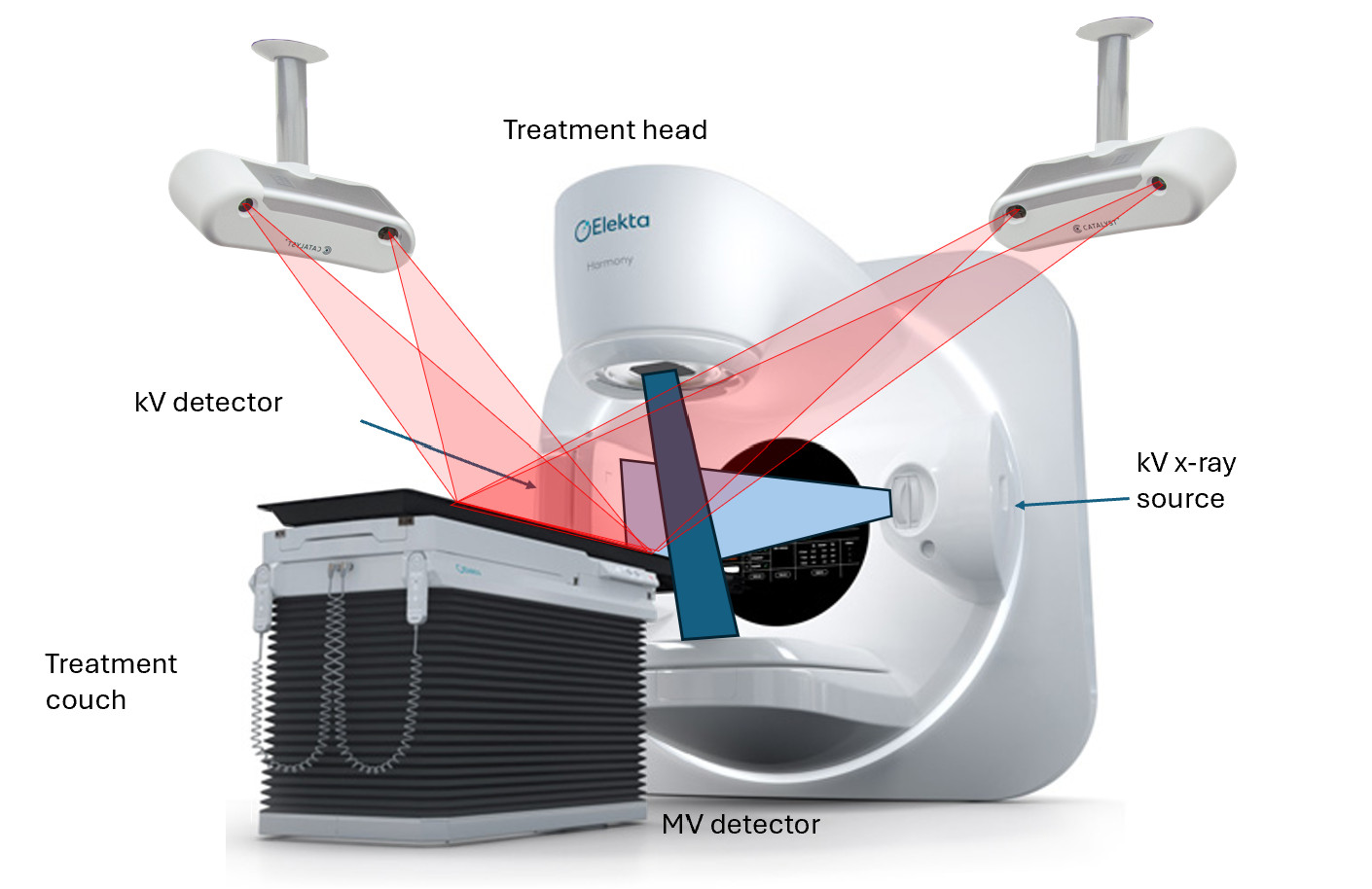
By combining x-ray imaging with prior information from the pre-treatment x-ray CT imaging, optical surface tracking and deep-learning based motion correction we will generate a 3D live feed of the patient during treatment. This will allow the treatment volume to be updated automatically based on breathing motion, heart pulsation or patient repositioning, leading to more precise dose delivery and sparing of organs at risk.
We expect that our adaptive radiotherapy treatment technique will be introduced in the clinic in a few years' time, leading to better treatment outcome and less side effects for patients.
More information:
Intratreatment kV/MV-imaging for inline adaptive radiotherapy